Ph.D., University of California at Davis B.Sc., University of Guelph B.A., St. John Fisher University
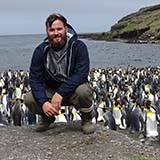
I love birds - everything about them. As a scientist I think about how birds use their sense of smell to find food, to identify each other, etc. I am also interested in how we can use odors to influence a bird's stress. As a bird-geek I think about the beauty of flight, the wonders of plumage, the spectacular sounds that birds can make, etc. I keep a list of all of the birds I've ever seen and am always looking to see new birds. That said, I find equal beauty in all birds, common or rare.
Teaching
BIOL 131/132/L - Anatomy and Physiology I and II (Lecture and lab)
BIOL 251 – General Biology, III
BIOL 314 - Advanced Human Physiology
BIOL 317 - Animal Behavior
BIOL 320 - Advanced Human Anatomy
BIOL 406 - Animal Natural History
BIOL 1110 - Data Analysis: Studying Nature
SUST 2450 - Creating Sustainable Futures
HNRS 2512 - It's a Bird's World
Research
Students working with Dr. Cunningham can expect to work with birds either in the wild or on campus. Dr. Cunningham's research focuses on how birds use their sense of smell. In the early days of avian biology, birds were thought not to rely much on scents. We now know that a variety of birds, from albatrosses flying over the ocean hunting for prey to pigeons returning to their roost, use their sense of smell regularly.
As a field biologist, Dr. Cunningham has worked on projects in the sub-Antarctic, Costa Rica, South Africa, and France. More recently, Dr. Cunningham is studying how olfactory capabilities might influence mating decisions by Leach’s storm petrels (Hydrobates leucorhous) on Bon Portage, Nova Scotia, Canada. He is also in the early stages of testing olfactory capabilities of marsh birds at the nearby Montezuma National Wildlife Refuge.
In the lab, Dr. Cunningham investigates how early olfactory experiences, both pre- and post-hatch, of chicken hatchlings (Gallus domesticus) can influence both the sensitivity toward odors and behavioral responses toward previously exposed scents. Chickens are a remarkable species to study here, as they are easy to maintain and manipulate in the lab.
Students in Dr. Cunningham’s lab periodically work at Seneca Park Zoo, often studying enrichment with the goal of reducing stress in these captive animals. Students have studied giraffes, elephants, red pandas, olive baboons, white rhinoceros, and polar bears. Although Dr. Cunningham focuses on olfaction in birds, he is generally interested in many elements of animal research. A student proposing research of a purely ecological or animal behavior-based study on any animal would be welcome in the lab.
Publications
Does Accreditation by the Association of Zoos and Aquariums Correlate with Animal Welfare Act Compliance?, Journal of Applied Animal Welfare Science, DOI: 10.1080/10888705.2022.2028150, 2022. Co-authored with K. Riedman, L. DiVincenti.
Embryonic exposure of chicken chicks (Gallus gallus domesticus) leads to heightened sensitivities towards the exposed scent. Behaviour, 154, 1361-1375, 2018. Co-authored with R. Hughes.
Visual field shape and foraging ecology in diurnal raptors. Journal of Experimental Biology, 221, 1-9, 2018. Co-authored with S. Potier, O. Duriez, G.R. Martin, V. Bonhomme, C. O’Rourke, E. Fernández-Juricic E, and F. Bonadonna.
The nose knows: How tri-trophic interactions and natural history shape bird foraging behavior, Teaching Issues and Experiments in Ecology, Vol. 13: Practice #8 [online], 2018. Co-authored with K. Bonner.
Responses of King penguin (Aptenodytes patagonicus) adults and chicks to two food-related odours, Journal of Avian Biology, 48, 235-242, 2017. Co-authored with S. Leclaire, C. Toscani, and F. Bonadonna.
Parental influences on the behavior of a juvenile Bornean orangutan (Pongo pygmaeus), The Review: A Journal of Undergraduate Student Research, 17, Article 8, 2016. Co-authored with R. McUmber and S. Robarts.
King penguins can detect two odours associated conspecifics. Journal of Experimental Biology, 218, 3374-3376, 2015. Co-authored with F. Bonadonna.
Responses of common diving petrel (Pelecanoides urinatrix) chicks to burrow and colony specific odours in a simple wind tunnel, Antarctic Science, 24, 337-341, 2012. Co-authored with R.W. Van Buskirk, M.J. Hodges, and G.A. Nevitt.
Evidence for olfactory learning in procellariiform seabird chicks, Journal of Avian Biology, 42, 85-88, 2011. Co-authored with G.A. Nevitt.
African penguins (Spheniscus demersus) can detect dimethyl sulphide, a prey-related odour. Journal of Experimental Biology, 211, 3123-3127, 2008. Co-authored with V. Strauss and P. Ryan.
Behavioural responses of Blue petrel chicks (Halobaena caerulea) to food-related and novel odours in a simple wind tunnel. Antarctic Science 18, 345-352, 2006. Co-authored with R.W. Van Buskirk, M.J. Hodges, and G.A. Nevitt.
The sense of smell in procellariiforms: An overview and new directions, Chemical Senses in Vertebrates, X. 403-408. 2005. Co-authored with G.A. Nevitt.
Evidence for nest-odour recognition in two species of diving petrel. Journal of Experimental Biology 206, 3719 – 3722, 2003. Co-authored with F. Bonadonna, P. Jouventin, F. Hesters, and G.A. Nevitt.
A comparison of the olfactory abilities of three species of procellariiform chicks. Journal of Experimental Biology 206, 1615 – 1620, 2003. Co-authored with R.W. Van Buskirk, F. Bonadonna, H. Weimerskirch, and G.A. Nevitt.
GregCunninghamProfessorISHS 215gcunningham@sjf.edu(585) 385-7268/media/sized-image-library/headshots-160-x-160/headshots-a-c/Cunningham_Greg.jpgI love birds - everything about them. As a scientist I think about how birds use their sense of smell to find food, to identify each other, etc. I am also interested in how we can use odors to influence a bird's stress. As a bird-geek I think about the beauty of flight, the wonders of plumage, the spectacular sounds that birds can make, etc. I keep a list of all of the birds I've ever seen and am always looking to see new birds. That said, I find equal beauty in all birds, common or rare.
Teaching
BIOL 131/132/L - Anatomy and Physiology I and II (Lecture and lab)
BIOL 251 – General Biology, III
BIOL 314 - Advanced Human Physiology
BIOL 317 - Animal Behavior
BIOL 320 - Advanced Human Anatomy
BIOL 406 - Animal Natural History
BIOL 1110 - Data Analysis: Studying Nature
SUST 2450 - Creating Sustainable Futures
HNRS 2512 - It's a Bird's World
Research
Students working with Dr. Cunningham can expect to work with birds either in the wild or on campus. Dr. Cunningham's research focuses on how birds use their sense of smell. In the early days of avian biology, birds were thought not to rely much on scents. We now know that a variety of birds, from albatrosses flying over the ocean hunting for prey to pigeons returning to their roost, use their sense of smell regularly.
As a field biologist, Dr. Cunningham has worked on projects in the sub-Antarctic, Costa Rica, South Africa, and France. More recently, Dr. Cunningham is studying how olfactory capabilities might influence mating decisions by Leach’s storm petrels (Hydrobates leucorhous) on Bon Portage, Nova Scotia, Canada. He is also in the early stages of testing olfactory capabilities of marsh birds at the nearby Montezuma National Wildlife Refuge.
In the lab, Dr. Cunningham investigates how early olfactory experiences, both pre- and post-hatch, of chicken hatchlings (Gallus domesticus) can influence both the sensitivity toward odors and behavioral responses toward previously exposed scents. Chickens are a remarkable species to study here, as they are easy to maintain and manipulate in the lab.
Students in Dr. Cunningham’s lab periodically work at Seneca Park Zoo, often studying enrichment with the goal of reducing stress in these captive animals. Students have studied giraffes, elephants, red pandas, olive baboons, white rhinoceros, and polar bears. Although Dr. Cunningham focuses on olfaction in birds, he is generally interested in many elements of animal research. A student proposing research of a purely ecological or animal behavior-based study on any animal would be welcome in the lab.
Publications
Does Accreditation by the Association of Zoos and Aquariums Correlate with Animal Welfare Act Compliance?, Journal of Applied Animal Welfare Science, DOI: 10.1080/10888705.2022.2028150, 2022. Co-authored with K. Riedman, L. DiVincenti.
Embryonic exposure of chicken chicks (Gallus gallus domesticus) leads to heightened sensitivities towards the exposed scent. Behaviour, 154, 1361-1375, 2018. Co-authored with R. Hughes.
Visual field shape and foraging ecology in diurnal raptors. Journal of Experimental Biology, 221, 1-9, 2018. Co-authored with S. Potier, O. Duriez, G.R. Martin, V. Bonhomme, C. O’Rourke, E. Fernández-Juricic E, and F. Bonadonna.
The nose knows: How tri-trophic interactions and natural history shape bird foraging behavior, Teaching Issues and Experiments in Ecology, Vol. 13: Practice #8 [online], 2018. Co-authored with K. Bonner.
Responses of King penguin (Aptenodytes patagonicus) adults and chicks to two food-related odours, Journal of Avian Biology, 48, 235-242, 2017. Co-authored with S. Leclaire, C. Toscani, and F. Bonadonna.
Parental influences on the behavior of a juvenile Bornean orangutan (Pongo pygmaeus), The Review: A Journal of Undergraduate Student Research, 17, Article 8, 2016. Co-authored with R. McUmber and S. Robarts.
King penguins can detect two odours associated conspecifics. Journal of Experimental Biology, 218, 3374-3376, 2015. Co-authored with F. Bonadonna.
Responses of common diving petrel (Pelecanoides urinatrix) chicks to burrow and colony specific odours in a simple wind tunnel, Antarctic Science, 24, 337-341, 2012. Co-authored with R.W. Van Buskirk, M.J. Hodges, and G.A. Nevitt.
Evidence for olfactory learning in procellariiform seabird chicks, Journal of Avian Biology, 42, 85-88, 2011. Co-authored with G.A. Nevitt.
African penguins (Spheniscus demersus) can detect dimethyl sulphide, a prey-related odour. Journal of Experimental Biology, 211, 3123-3127, 2008. Co-authored with V. Strauss and P. Ryan.
Behavioural responses of Blue petrel chicks (Halobaena caerulea) to food-related and novel odours in a simple wind tunnel. Antarctic Science 18, 345-352, 2006. Co-authored with R.W. Van Buskirk, M.J. Hodges, and G.A. Nevitt.
The sense of smell in procellariiforms: An overview and new directions, Chemical Senses in Vertebrates, X. 403-408. 2005. Co-authored with G.A. Nevitt.
Evidence for nest-odour recognition in two species of diving petrel. Journal of Experimental Biology 206, 3719 – 3722, 2003. Co-authored with F. Bonadonna, P. Jouventin, F. Hesters, and G.A. Nevitt.
A comparison of the olfactory abilities of three species of procellariiform chicks. Journal of Experimental Biology 206, 1615 – 1620, 2003. Co-authored with R.W. Van Buskirk, F. Bonadonna, H. Weimerskirch, and G.A. Nevitt.
Greg Cunningham on Fisher Digital PublicationsPh.D., University of California at Davis B.Sc., University of GuelphB.A., St. John Fisher UniversityIntersection of animal behavior, ecology, and physiology of a variety of bird speciesApple Teacher